
Making the Grade 2025: In an Uncertain Federal Policy Landscape, States Must Prioritize Fair School Funding
FOR IMMEDIATE RELEASE
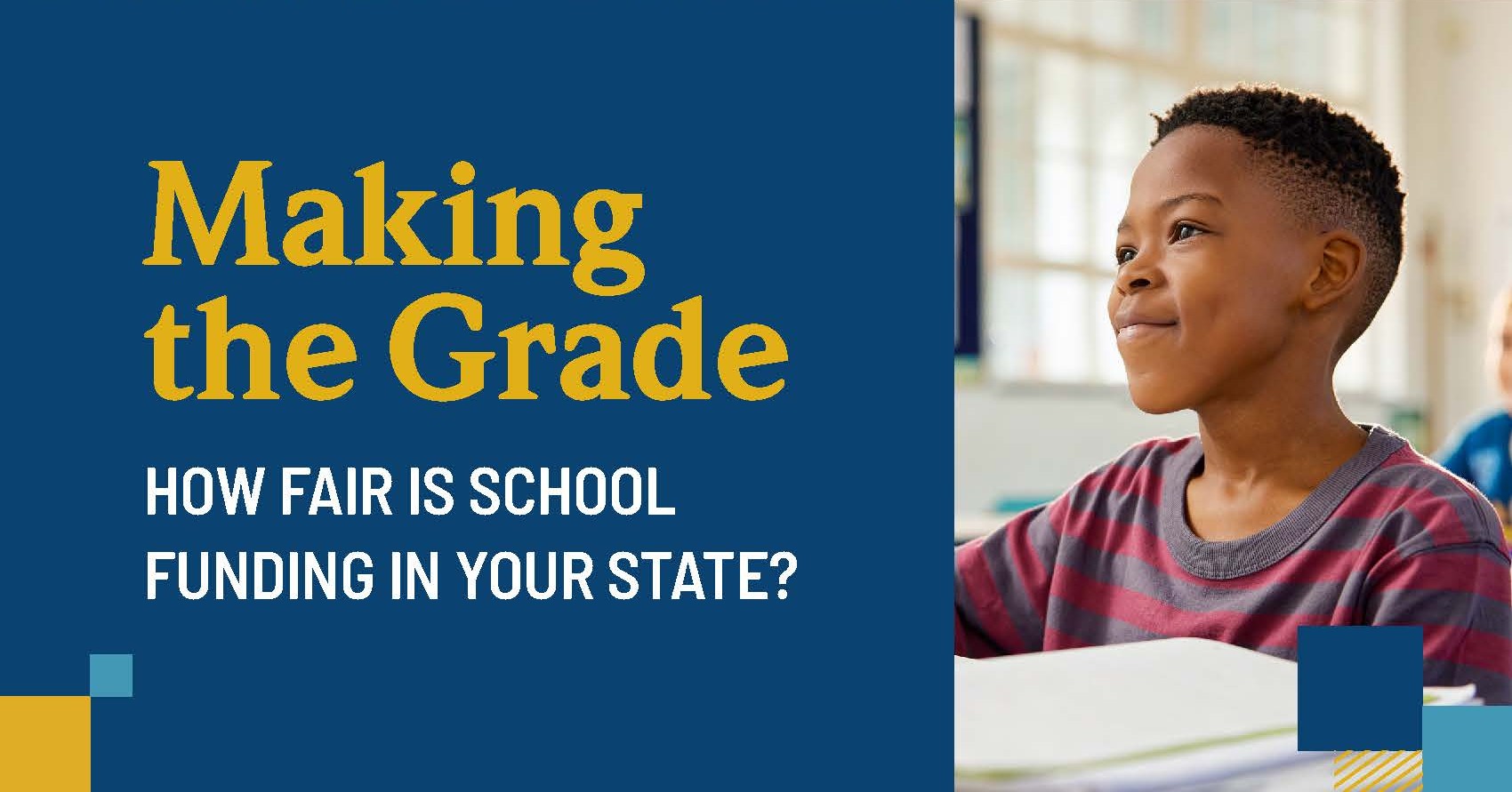
NEWARK, N.J. – Today, Education Law Center released, Making the Grade: How Fair is School Funding in Your State?, the latest contribution to the organization’s decade and a half series of annual reports on school funding fairness. This year’s version warns that too many states are not fairly funding their public schools, while the Trump administration’s threats to reduce federal education funding and dismantle the U.S. Education Department would contribute to weakening equity in nearly all states.
“The current uncertainty surrounding federal funding underscores just how important it is for states to establish fair and equitable state funding systems,” said report co-author Dr. Danielle Farrie, ELC Research Director. “States are responsible for creating a strong foundation for school funding. Federal investment is most impactful if it is supplementing an underlying system of state and local funds that is fair and well resourced. And if federal funding is reduced or taken away, adequate state funding becomes that much more important.”
What grades did your state receive? Find out here.
Making the Grade 2025 evaluates each state’s education funding system on three critical measures of fairness:
- Funding Level measures the combined per-pupil state and local revenue provided to school districts, adjusted for regional cost differences. The report finds the lowest funded state (Idaho) provides $17,000 less per student than the highest funded state (New York).
- Funding Distribution measures the allocation of funds to school districts relative to the concentration of students from low-income families. Only seventeen of the 48 states evaluated had at least a modestly progressive distribution of state and local funding, eleven fewer than just one year prior.
- Funding Effort measures investment in K-12 public education as a percentage of a state’s economic productivity (GDP). The effort a state makes, combined with the state’s overall fiscal capacity, determines how well schools are funded. In approximately half the states, investments in public schools continue to lag behind economic growth. Overall, effort remains depressed compared to typical pre-pandemic levels.
Some key takeaways from the report:
- Not a single state earned a grade of A on all three funding fairness indicators.
- California’s investment in a new, more equitable school funding formula is paying off: The state dramatically improved on all three measures and now has the second most progressive funding distribution in the nation.
- Several states have high average funding levels but flat or regressive distribution, necessitating school finance reforms to better allocate revenue according to student need (Connecticut, Illinois, Maine, Michigan, New Hampshire, New York, New Jersey, and Pennsylvania).
- Of the 19 states that earned a D or F grade on funding level, 13 also earned a D or F on effort. These states are not leveraging their economic capacity to better fund schools.
- Florida, Idaho, and Tennessee have the unenviable distinction of earning Fs across all three indicators.
This year’s report also evaluated the contribution of federal revenue to funding equity, both within and between states. An analysis of 2018-19 data, the most recent funding data that isn’t complicated by non-recurring Covid relief aid, found that while federal investment in schools does little to disrupt the vast disparities in average funding levels among states, the targeting of federal funds to high-poverty districts improved within-state equity in nearly all states. However, federal revenue only modestly improved states’ otherwise flat or regressive funding.
“Federal revenue clearly plays an important role in improving equity in school funding. Congress must act to strengthen federal programs and incentivize states to maintain and improve their investments in school funding,” said ELC Executive Director and report co-author Robert Kim. “But state and local policymakers must ensure students have the resources they need, regardless of what actions are taken by the federal government. Ultimately it is the states’ responsibility to provide adequate and equitable funding and resources for public schools and their students.”
Making the Grade 2025 is co-authored by Dr. Danielle Farrie, ELC Research Director, and Robert Kim, ELC Executive Director. View the full report and explore findings with interactive tools online, including downloadable state profiles.
Press Contact:
Sharon Krengel
Director of Policy, Strategic Partnerships and Communications
skrengel@edlawcenter.org
973-624-1815, x240